UX Portfolio

Behavioral Research Portfolio

This work sample demonstrates my ability to understand human experiences through mixed behavioral research methods and translate complex data into actionable insights.

Name
Zhenghao Lu
Focus
Psychology Researcher | Data Analysis
Featured Cases
7-day diary study on student well-being; latent profiles of job burnout among female kindergarten teachers.

About Me

Psychology-trained researcher with UX-transferable methods

I am a psychology-trained researcher with experience in longitudinal behavioral research, survey-based studies, statistical modeling, and research communication.

My work focuses on understanding human needs, emotional experiences, and behavioral patterns through structured research methods.

Although these projects were conducted in academic contexts, they demonstrate transferable UX research skills, including diary study design, behavioral data analysis, user segmentation, insight synthesis, and evidence-based communication.

Case 1

Case 1: Understanding Daily Emotional Experiences in High School Students

A 7-day diary study on subjective well-being, hope, academic stress, and daily need satisfaction.

Project Context

High school students' well-being is not static. Their emotional experiences may fluctuate from day to day depending on academic stress, hope, and psychological need satisfaction. This project aimed to understand these daily dynamics using a longitudinal diary design.

Research Questions

  1. How do students' well-being and emotional experiences fluctuate across days?
  2. How are daily hope and academic stress associated with daily well-being?
  3. How can we distinguish within-person changes from between-person differences?

Contribution and Analysis Process

01

Data Preparation

Screened and cleaned repeated-measures data to ensure accuracy, completeness, and consistency.

02

Data Structuring

Organized diary data into an analysis-ready format suitable for daily-level modeling.

03

Statistical Modeling

Conducted multilevel modeling in R to distinguish within-person fluctuations from between-person differences.

04

Research Communication

Contributed to result interpretation, visualization, and manuscript preparation.

Selected Figures

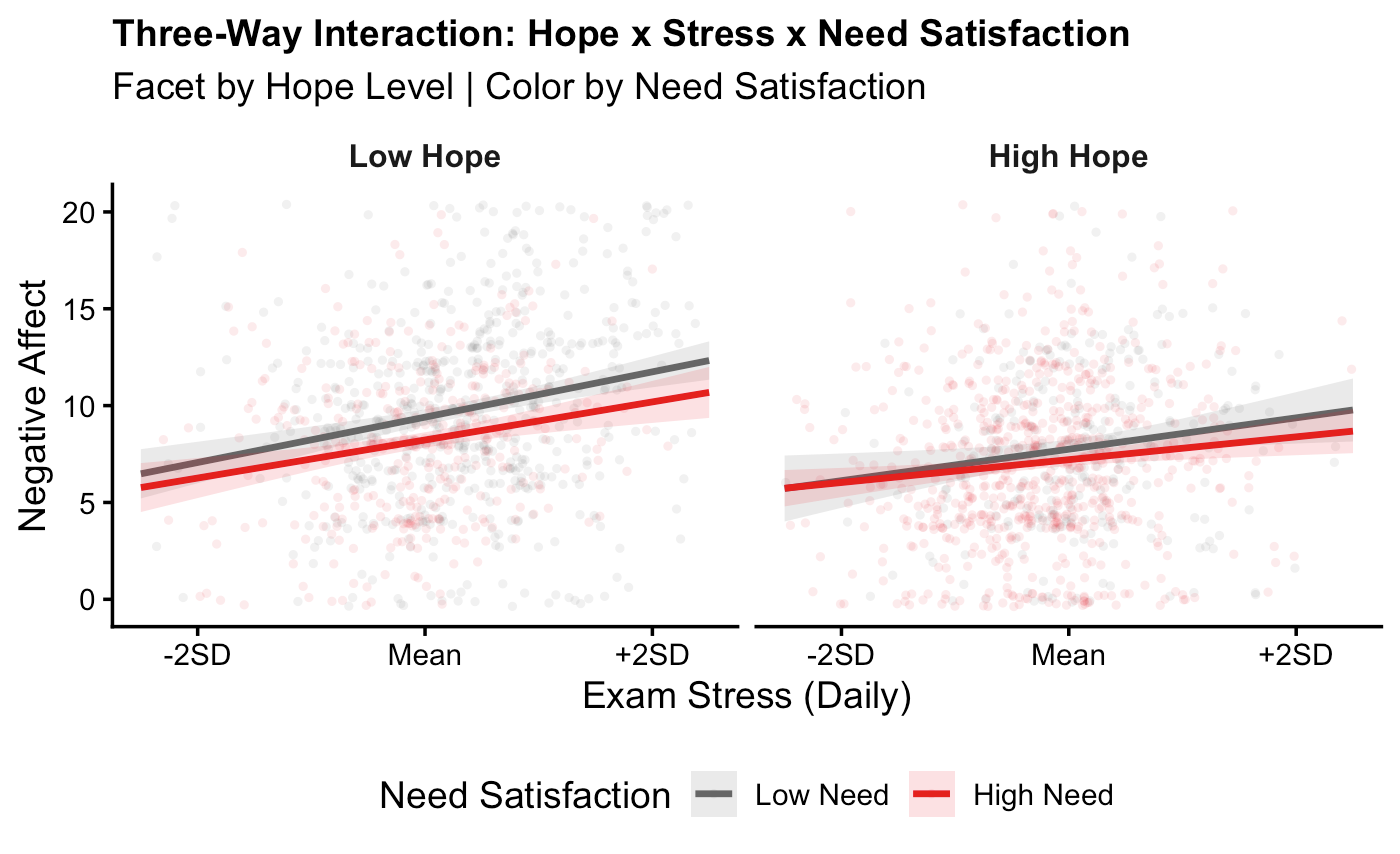
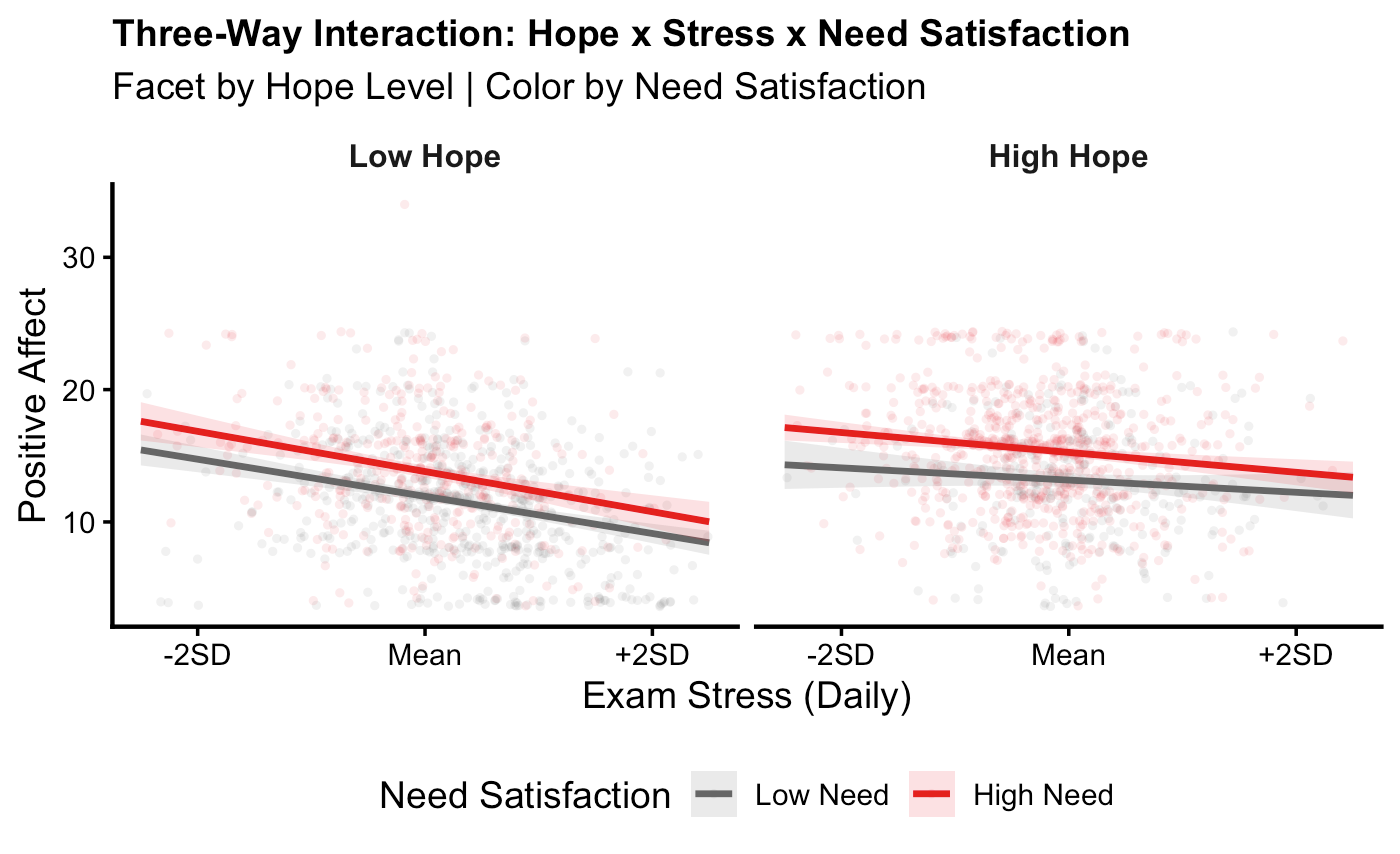
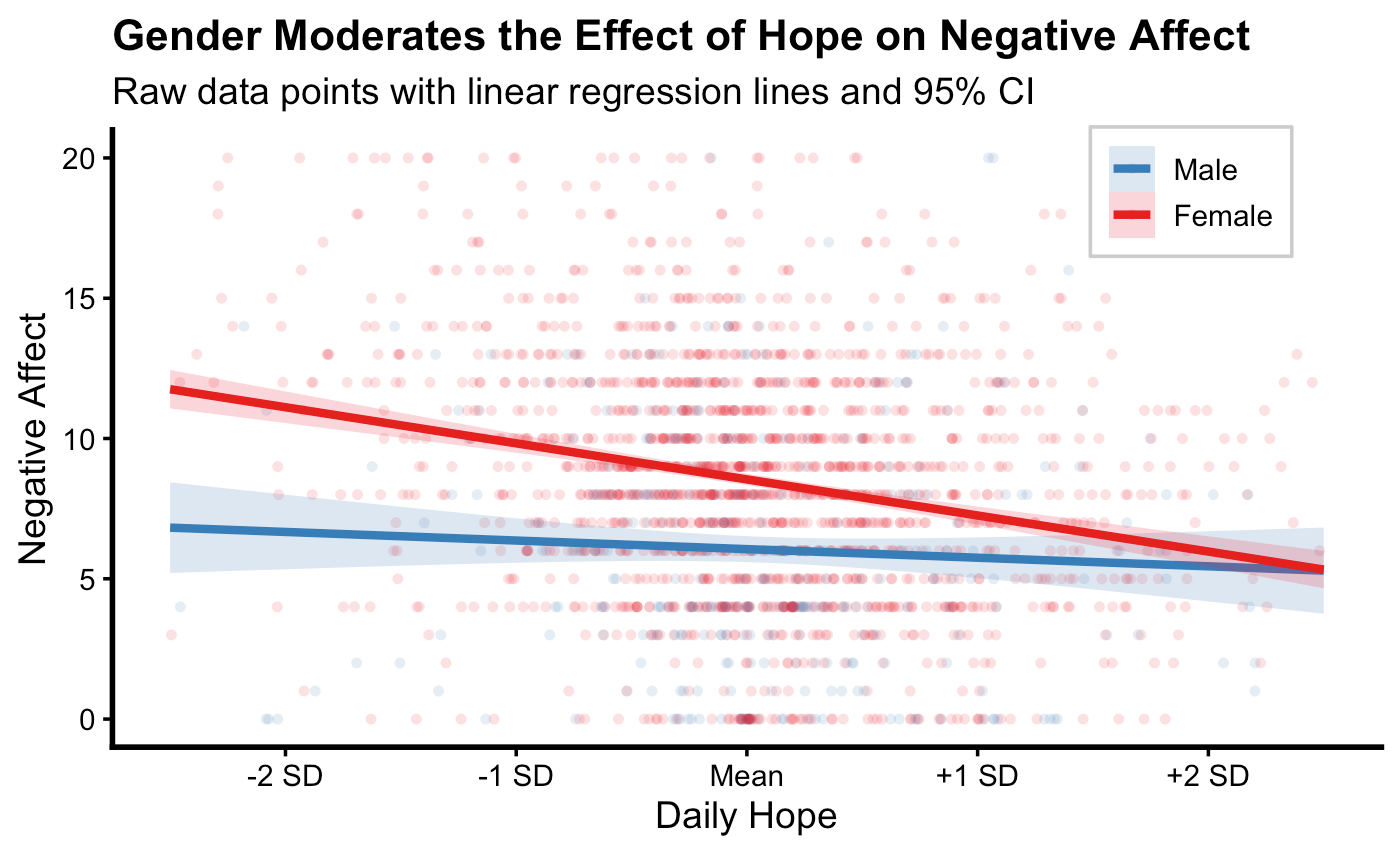
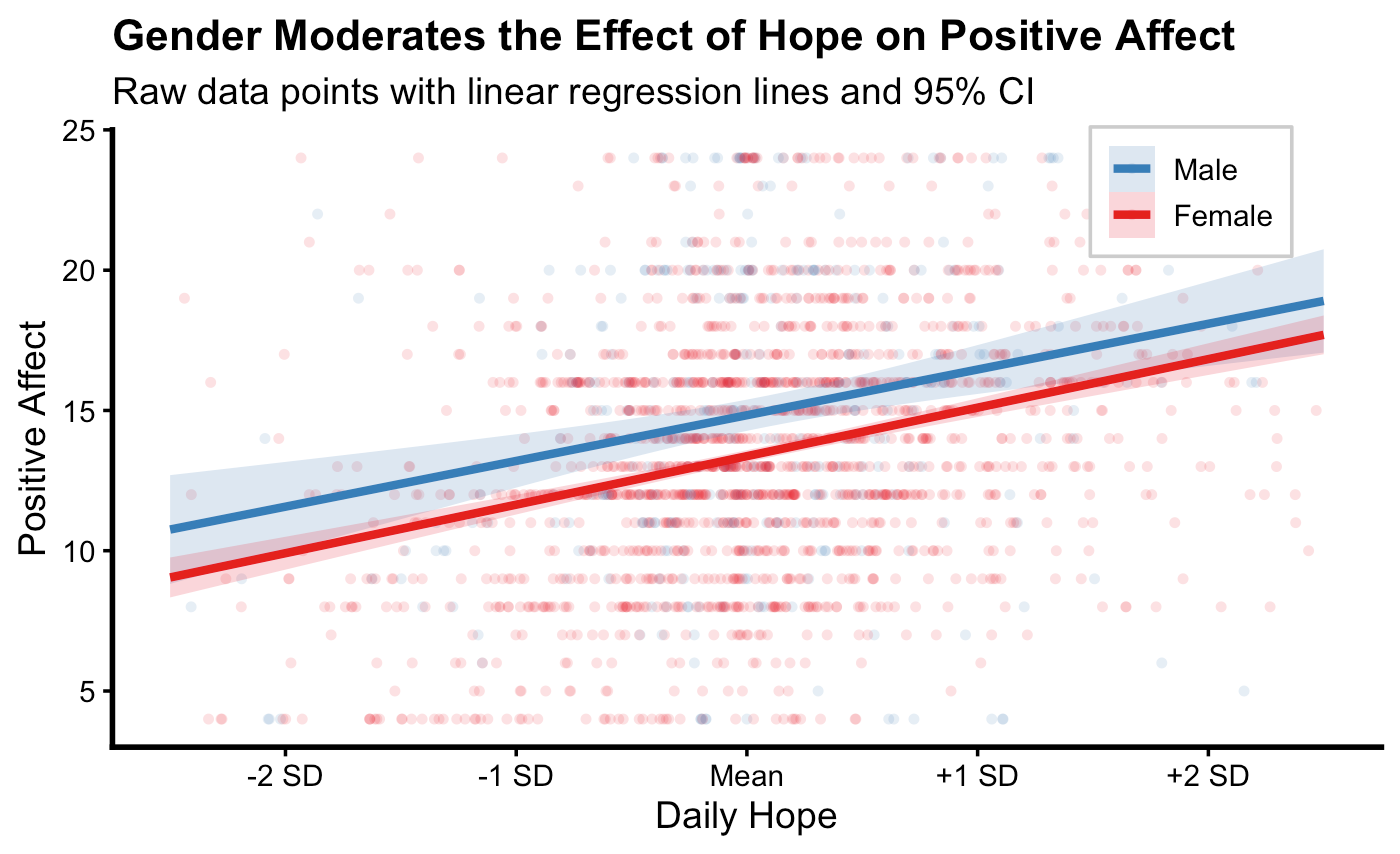
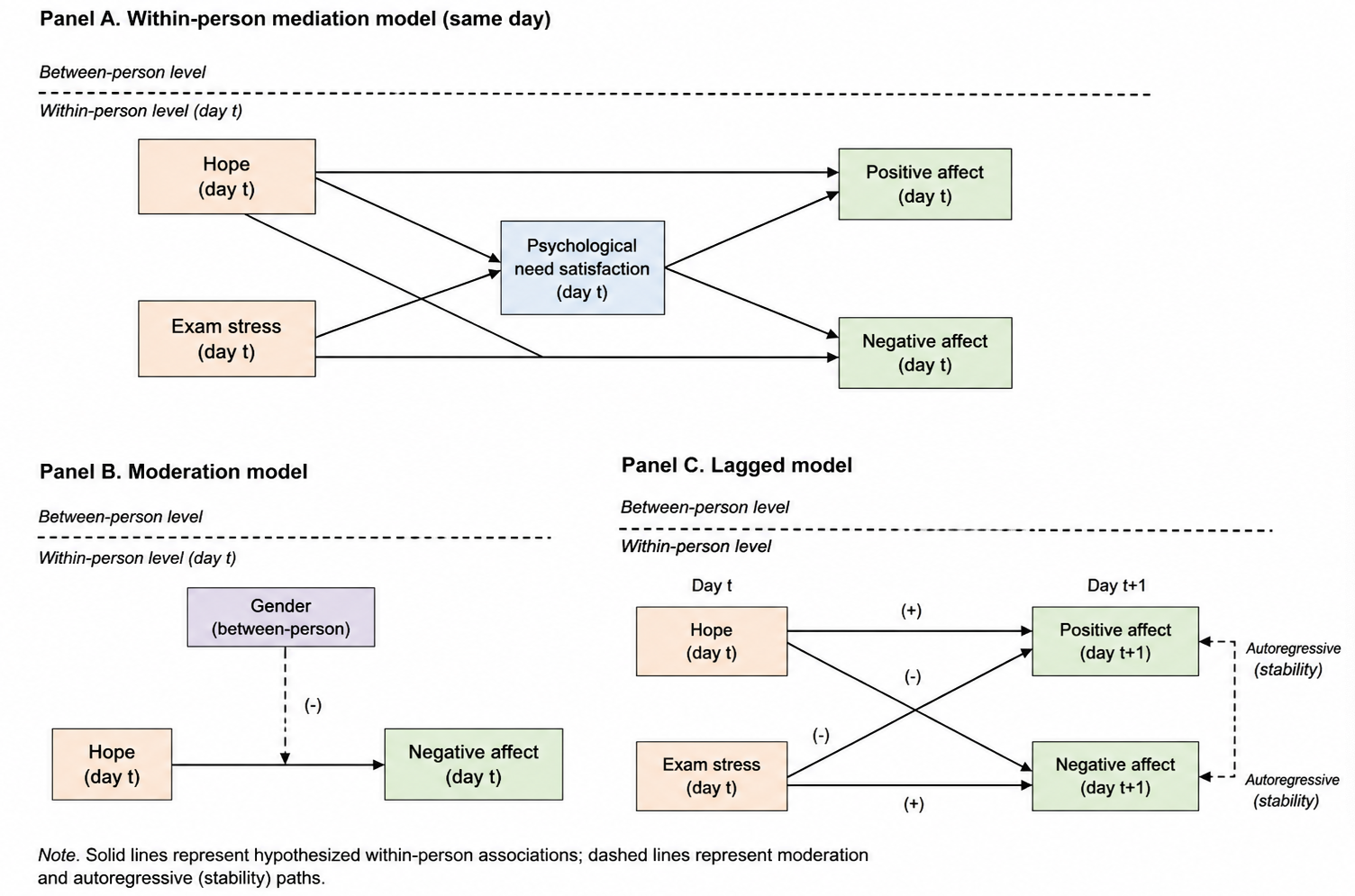
Model and interaction findings

Visual summaries of the study model, three-way interaction patterns, and gender moderation effects.

Key Insights

Insight 1

Student well-being should be understood as a dynamic daily experience, not only as a stable trait.

Students may experience meaningful day-to-day changes in emotional states, which suggests the importance of tracking experiences over time rather than relying only on one-time measurements.

Insight 2

Hope may function as a daily psychological resource.

Daily hope can help explain why students feel better on some days than others, highlighting the value of psychological resources in stressful academic contexts.

Insight 3

Academic stress needs to be interpreted at both individual and daily levels.

Some students may generally experience higher stress than others, while the same student may also experience unusually stressful days. These two patterns require different interpretations.

Case 2

Case 2: Latent Profiles of Job Burnout among Female Kindergarten Teachers

A person-centered research case using latent profile analysis.

Project Context

Burnout is not experienced in the same way by all teachers. Instead of assuming a single average pattern, this project used a person-centered approach to identify distinct burnout profiles among female kindergarten teachers.

Research Questions

  1. Are there distinct burnout profiles among female kindergarten teachers?
  2. How do these profiles differ across burnout dimensions and related variables?
  3. How can statistical profiles be translated into meaningful group-level insights?

From Latent Profiles to Human Segments

High-Organizational Support Group

High organizational climate resources, but comparatively lower social well-being and trait hope.

Human segment interpretation

These teachers may work in a relatively supportive organizational environment, but their internal psychological and social resources are not equally strong.

High-Resource Group

High levels across organizational climate, social well-being, and trait hope.

Human segment interpretation

These teachers appear resource-rich across both workplace and personal domains. However, the manuscript shows that this group reported the highest levels of burnout across emotional exhaustion, depersonalization, and reduced personal accomplishment.

Low-Resource Group

Lower organizational climate, social well-being, and trait hope.

Human segment interpretation

This group showed limited psychosocial resources across both external and internal domains. Interestingly, the manuscript reports that this group had relatively lower burnout levels than expected.

High-Well-Being Group

Lower organizational climate resources, but higher social well-being and trait hope.

Human segment interpretation

These teachers may rely more on internal and social psychological resources, even when the organizational environment is less supportive.

The four profiles show that psychosocial resources do not translate into burnout outcomes in a simple linear way. A person-centered approach reveals distinct teacher segments with different resource configurations, burnout risks, and support needs.

Key Insights

Insight 1

Burnout is heterogeneous.

Teachers with similar overall burnout scores may still show different patterns across emotional exhaustion, depersonalization, and personal accomplishment.

Insight 2

Person-centered analysis can reveal hidden needs.

Different burnout profiles may require different types of support rather than one-size-fits-all interventions.

Insight 3

Statistical segmentation can support targeted strategy.

By identifying distinct profiles, research findings can be translated into more precise support recommendations for schools, organizations, or service systems.

In UX research, similar segmentation logic can be used to identify different user types, prioritize user needs, and develop persona-informed product or service strategies.

What These Cases Demonstrate

Research capabilities for UX work

Together, these projects show how my psychology research background can support UX research work that requires curiosity, empathy, analytical rigor, and clear communication.

01

Research Design

I can translate human experience questions into structured research designs.

02

Longitudinal Thinking

I can analyze how experiences change over time rather than relying only on one-time measurements.

03

Quantitative Research Capability

I can clean, structure, analyze, and visualize complex behavioral datasets.

04

Segmentation Mindset

I can identify meaningful subgroups and translate statistical patterns into human-centered insights.

05

Insight Communication

I can turn complex research findings into clear, actionable narratives for non-specialist audiences.

From Academic Research to UX Research

Transferable research methods and applications

Academic Research Practice Core Research Capability UX Research Application
Diary Study Tracking experience over time Diary studies, onboarding research, retention experience tracking
Daily emotional fluctuation Understanding changing user states Identifying how users' needs, emotions, and pain points evolve across contexts
Within-person analysis Context-sensitive behavior analysis Understanding how the same user behaves differently under different situations
Between-person differences Individual difference thinking User segmentation and identifying different experience patterns
Multilevel modeling Analyzing nested behavioral data Interpreting repeated user data, session-level data, or longitudinal feedback
Latent profile analysis Pattern recognition and segmentation User segmentation, behavioral clustering, persona development
Burnout profiles Translating data into human groups Creating evidence-informed user types or need-based personas
Model comparison Evidence-based decision-making Validating segment structures or prioritizing research interpretations
Post-profile comparison Comparing needs across groups Identifying different pain points, motivations, and support needs across user segments